Clear Brush and Small Trees Without Hauling Debris
Forestry Mulching in Madison for overgrown acreage, trail development, and hunting land that needs efficient clearing with minimal erosion risk
Alpha Grade & Land Services provides forestry mulching for property owners in Madison who need to clear brush, saplings, and small trees while leaving behind a protective layer of mulch instead of piles of debris. You might be reclaiming overgrown pasture, cutting trails through wooded sections, or preparing hunting land for better visibility and movement. This method eliminates the need for burning permits, debris hauling, and the bare soil exposure that leads to erosion after traditional clearing.
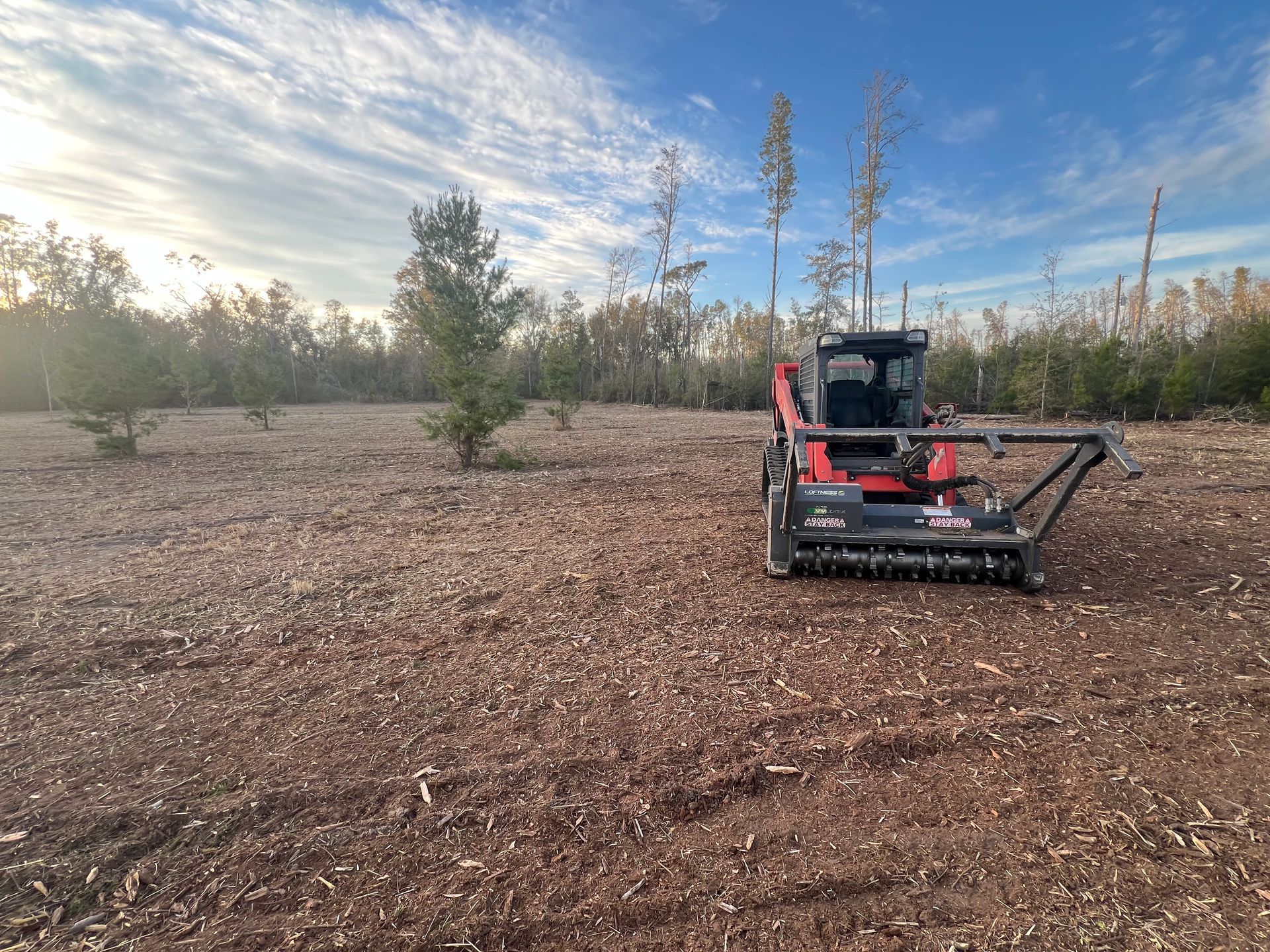
The process uses a rotating drum with carbide teeth that grinds vegetation into mulch on contact, distributing it evenly across the cleared area. The mulch layer stabilizes soil, retains moisture, and decomposes over time to improve ground quality. In Madison, where rainfall can wash away topsoil on freshly cleared land, forestry mulching reduces runoff and keeps nutrients in place. The method works for both residential properties and agricultural land, and it handles mixed vegetation without requiring sorting or separate disposal.
If you need overgrown areas cleared without creating secondary cleanup work, contact Alpha Grade & Land Services to assess your property and determine coverage.
What Forestry Mulching Accomplishes on Different Land Types
You schedule the work based on acreage, vegetation density, and intended use after clearing. The mulching head processes stumps up to a certain diameter, typically eight inches, and grinds down undergrowth, vines, and woody shrubs in a single pass. Larger trees are felled separately if needed, then mulched on-site. The result is a cleared footprint covered in shredded organic material rather than exposed dirt.
After completion, you will see defined trails, open sight lines, and ground that remains stable even during heavy rain. The mulch layer prevents weed seeds from taking hold immediately and creates a base that supports replanting or natural regeneration depending on your goals. Alpha Grade & Land Services adjusts equipment settings and pass patterns based on terrain slope and root density, so the finished surface stays level and the mulch distributes evenly without clumping.
This service does not include stump grinding below grade or removal of rock and debris unrelated to vegetation. If your property has old fence posts, concrete rubble, or other non-organic obstacles, those require separate handling. Forestry mulching focuses on organic material and works best when the land has been walked and assessed for hidden obstructions before equipment arrives.
What Property Owners Want to Know About Mulching
Landowners often ask how mulching compares to other clearing methods, what happens to stumps, and how long the mulch layer lasts before vegetation returns.
How does forestry mulching differ from dozer clearing?
Dozer work removes vegetation and roots but leaves bare soil and requires hauling debris offsite. Mulching processes material in place, leaving a protective layer that reduces erosion and eliminates disposal logistics.
What happens to tree stumps after mulching?
Stumps are ground down to ground level or slightly below, depending on diameter. Larger stumps may leave a low mound of mulch that settles over time as decomposition occurs beneath the surface.
Why does mulch help prevent erosion?
The layer acts as a barrier between rainfall and soil, slowing water movement and allowing absorption instead of runoff. In Madison, where sandy soils drain quickly but also wash away easily, mulch keeps the ground intact during storms.
When does vegetation start growing back through the mulch?
Regrowth timing depends on mulch depth and what was cleared. A three-inch layer typically suppresses light weeds for six to twelve months, though aggressive species like privet or wild grape may resprout sooner from surviving roots.
What types of land benefit most from forestry mulching?
Properties with mixed brush, overgrown fence lines, and wooded areas being converted to pasture or trails see the greatest benefit. It also works well for hunting land where you want to maintain some canopy while opening the understory.
If you need land cleared without the logistical burden of debris removal and erosion control, forestry mulching provides a streamlined solution that leaves your property ready for the next step. Reach out to Alpha Grade & Land Services to walk the site and review what the work will involve.